How Much Does Septic Tank Cleaning Cost?
“Cleaning” and “pumping” are not always the same thing
Most homeowners use these words interchangeably, and many septic companies do too. But there is a real difference between the two services, and knowing it helps you read a quote accurately.
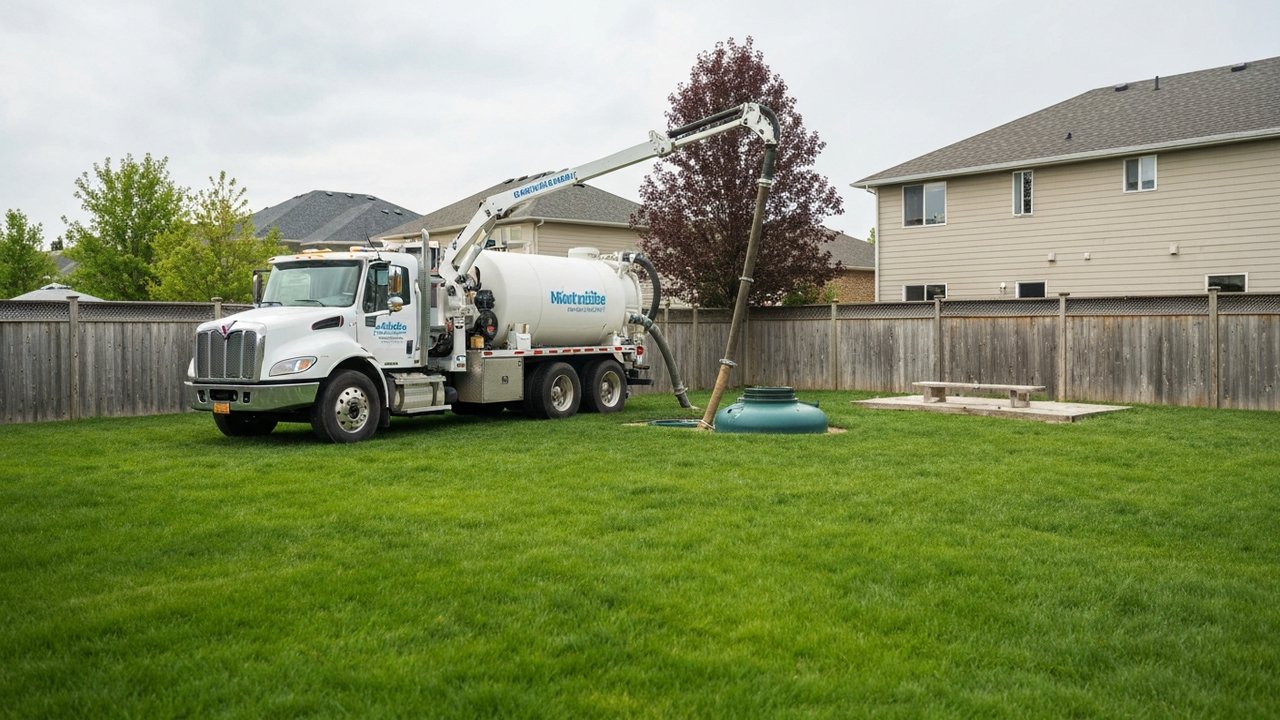
A basic pump-out means a vacuum truck removes the accumulated sludge, scum, and liquid from the tank. That is the standard service, and it is what most homes need every few years. A full cleaning goes further: the technician pumps the tank, then uses high-pressure water to wash down the walls and floor, clearing caked-on solids that the vacuum did not reach. Many full cleans also include a check of the inlet and outlet baffles and service of the effluent filter if one is present.
For most routine maintenance visits, a basic pump-out is all that is needed. Pressure washing is usually reserved for tanks that have gone many years without service, tanks with an unknown history, or pre-sale inspections where a buyer wants a clear look at the interior.
What a basic pump-out costs
For a standard 1,000 to 1,250 gallon residential tank on a normal pumping schedule, expect $300 to $600. Cost-tracking sites like Angi and HomeAdvisor put the national average near $425 to $450, which lines up with what licensed septic companies commonly quote. Small tanks (under 750 gallons) can come in around $250. Large tanks, 1,500 gallons and up, or tanks that are significantly overdue, can push the bill to $700 or more.
These figures assume an accessible lid and a tank on a reasonable schedule. Your actual quote can land above or below depending on where you live and the specifics of your system.
What a full cleaning with pressure washing costs
Full cleaning packages (pump, pressure wash, baffle check, filter service) commonly run $400 to $800 for a standard home. Heavily neglected tanks or those with significant mineral or grease buildup can push the price higher. For a detailed breakdown of what is and is not typically included in a pumping price, see our septic tank pumping cost guide.
What drives the price up or down
Tank size. The biggest single factor. Pumpers pay to dispose of what they haul, so a 1,500 gallon tank costs more to empty than a 750 gallon one.
How long since the last service. A tank pumped on schedule empties cleanly and quickly. A tank that is several years overdue can have hardened sludge that takes more time and equipment to remove. Some companies charge a flat premium for badly neglected tanks.
Lid access. If the lid is buried, most companies charge a separate dig fee, commonly $50 to $200 depending on depth. Installing a riser brings the lid to ground level at a one-time cost of $300 to $600 and eliminates dig fees on every future service. For many homeowners, the riser pays for itself within two or three visits.
Effluent filter service. Many newer tanks have an outlet filter that traps solids before they reach the drain field. Cleaning it is sometimes bundled, sometimes billed separately at around $50 to $150. If the filter needs replacing, parts and labor can run $200 to $400.
Location and disposal costs. Rural properties or those far from the company’s base may carry a trip charge. Tipping fees at approved treatment facilities vary by region, and areas with higher disposal costs reflect that in the quote.
Is a full cleaning worth it?
For most homes, a basic pump-out on a 3 to 5 year schedule does the job. The biological activity inside the tank keeps the walls reasonably clean between visits, and routine pumping removes what builds up. You are not typically leaving something harmful behind by skipping the pressure wash.
A full cleaning makes more sense for a tank with no service history, one that has not been touched in a decade or more, or a pre-sale inspection where a buyer wants to see the interior. The EPA does not list pressure washing as a standard routine requirement.
What does matter at every service, and is sometimes overlooked, is the effluent filter and the baffles. If your tank has an effluent filter, it needs cleaning at each pump-out. Inlet and outlet baffles should be checked for cracks or missing sections. Broken baffles let solids flow directly toward the drain field, which is exactly the failure that turns a $400 cleaning into a much larger repair. Ask your technician to check both during every visit and to note the findings in writing.
For a complete picture of what happens during a pump-out and what to expect from the service process, our how to clean a septic tank article covers the steps in detail.
How to get a fair quote
Call two or three licensed companies before scheduling anything that is not urgent. Give each one the same information: tank size in gallons (from your county health department permit or original installer records), when it was last serviced, whether the lid is at grade or buried, and whether you want a basic pump-out or a full clean.
Before the truck arrives, ask:
- Is the dig fee included if my lid is buried?
- Does the quote cover baffle inspection and a condition report?
- Is effluent filter service included or billed separately?
- Are there extra charges if the tank is heavily soiled or significantly full?
Get the answers in writing or at least confirmed by email. Surprise charges on the day of service are one of the most common complaints about septic companies.
Be cautious if a technician pushes additive treatments or bacterial products. The EPA does not recommend additives for a normally functioning system, and nothing replaces physically removing accumulated solids.
What you are actually protecting
A septic pump-out at a few hundred dollars protects a drain field that commonly costs $3,000 to $15,000 to replace. A full system replacement can run $10,000 to $30,000 or more depending on site conditions and local permitting. Cleaning is among the cheapest maintenance tasks in home ownership relative to what it prevents.
Septic systems can fail with very little warning. Solids that overflow into the drain field clog the soil, often irreversibly, and by the time slow drains or soggy ground show up, the field may already be compromised.
For timing guidance, our how often to pump a septic tank guide explains how household size, tank volume, and water use change your actual service interval.
FAQ
Is septic tank cleaning the same as pumping? Usually, yes, but not always. Many companies use the terms interchangeably to mean a standard pump-out. Others offer a full cleaning that adds pressure washing, baffle inspection, and filter service. Ask specifically what is included when you request a quote.
How much does it cost to clean a 1,000 gallon septic tank? For a standard 1,000 gallon tank on a normal service schedule, a basic pump-out typically runs $300 to $500. A full cleaning with pressure washing and filter service usually runs $400 to $600 for the same size tank. Local rates and lid accessibility affect the final bill.
How often should a septic tank be cleaned? The U.S. EPA recommends most households have the tank pumped every 3 to 5 years. Homes with larger families, heavy water use, or a garbage disposal may need service more often. A licensed septic professional can measure the sludge and scum layers and give you a reliable interval based on your actual system.
Can I clean the tank myself to save money? No. Septic tanks contain dangerous gases including hydrogen sulfide and methane, and the waste must go to an approved treatment facility via a licensed hauler. This is not a DIY job. Hire a licensed septic professional with the appropriate state or county certification.
This article is general educational information, not professional plumbing or engineering advice. Costs vary by region and provider. Get a written quote from a licensed local septic professional and confirm what your jurisdiction requires before scheduling service. No outcome is guaranteed.
- Septic Pump-Out Schedule Calculator Estimate the years between pump-outs from your tank size and household, and get a reminder.
Related guides
Cost to Repair a Septic System
What common septic repairs cost in the US, from a simple baffle swap to a failed drain field, and how to know which repairs are worth making.
Read the guide →Cost to Move or Relocate a Septic Tank
Relocating a septic tank means a full new installation plus abandoning the old one; most homeowners pay $8,000 to $25,000 or more depending on site and drain field needs.
Read the guide →Small Septic System Cost for Tiny Homes and Cabins
What a small septic system actually costs for a tiny home, cabin, or seasonal property, plus what drives the price and when a conventional system won't work.
Read the guide →Know what septic service should cost
Before you call a company, it helps to know the typical price for pumping, repair, and replacement so you can spot a fair quote. Our cost guide breaks it down.
See septic cost guide →