Septic Tank Pumping Cost: What You Should Pay
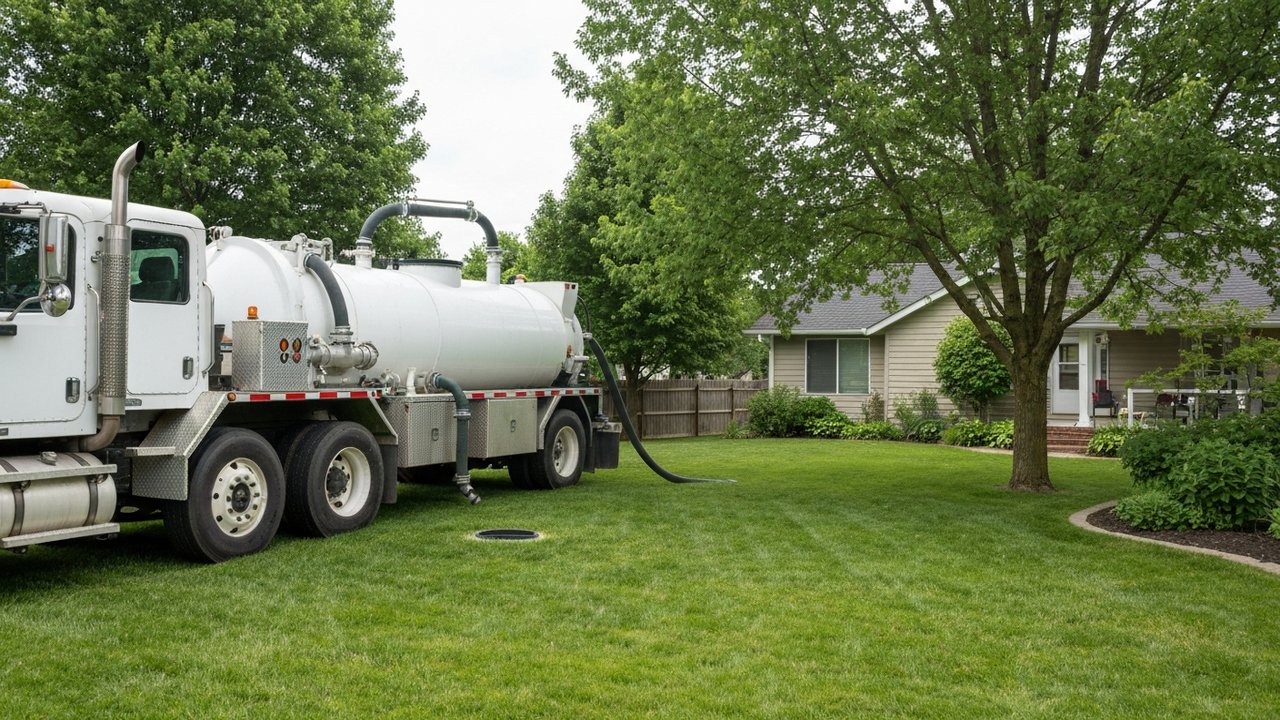
What is the typical price to pump a septic tank?
Independent cost-tracking sites put the national average for septic tank pumping in the low to mid hundreds. As of 2026, Angi reports an average of about $427, with most homeowners paying between roughly $291 and $563. HomeAdvisor cites very similar figures. Other 2025 to 2026 guides describe the common range as $300 to $600, with a typical bill landing near $425 to $450 for a standard tank.
Those numbers describe a routine job: a single tank, a reasonably accessible lid, and a tank that is on a normal pumping schedule rather than badly overdue. Your actual quote can land below or above the average depending on where you live and the specifics of your tank, which is why it helps to understand what moves the price.
What drives the price up or down
Tank size. This is the biggest single factor, because the pumper hauls away everything inside and pays to dispose of it. Industry cost guides describe small tanks (around 600 to 750 gallons) costing as little as $250, a standard 1,000 gallon tank running roughly $300 to $425, and larger 1,500 to 2,000 gallon tanks costing $400 to $700 or more.
How full or overdue it is. A tank pumped on schedule empties cleanly. A tank that is years overdue can have hardened sludge, a clogged outlet, or backed-up solids that take extra time and equipment to clear, and some companies charge more for that labor.
Accessibility and risers. If your tank lid is buried, the company often charges a separate dig fee to locate and uncover it, commonly reported at $50 to $200 depending on depth, and some charge by the foot. Installing a riser (a vertical access pipe that brings the lid to ground level) typically costs $300 to $600 up front but eliminates the dig fee at every future pumping, so it tends to pay for itself within a couple of service visits.
Location and labor. Local labor rates, drive distance to your property, and how far the truck must park from the tank all affect the quote. Reported regional swings are large. Some metros run $440 to $750 while others come in under $300 for the same job.
Disposal fees. Pumpers pay to dump waste at a treatment facility, and those tipping fees vary by region. In areas with higher disposal costs, your bill reflects it.
What is and is not included
A basic pumping price usually covers locating an accessible lid, pumping the liquid and solids out of the tank, and hauling the waste away for disposal. Read the quote so you know what is bundled.
Common add-ons that may or may not be included:
- Inspection. Many companies offer a visual or full inspection of the tank, baffles, and outlet while the tank is empty. Sometimes it is included, sometimes it is an extra charge.
- Effluent filter cleaning. If your tank has an outlet filter, cleaning or replacing it is sometimes a separate line item, reported anywhere from about $100 to $400 for service, or less if you handle a simple cleaning yourself.
- Locating and digging up a buried lid. Often billed separately if the lid is not already exposed.
- Pumping a second compartment or second tank. Some systems have two access points, which can roughly double the work.
Warning signs of upsells
Most septic companies are honest, but a few inflate the bill. Be cautious if a technician:
- Pushes expensive additive products or “treatments” they claim you must buy. The EPA does not require additives for a normally functioning system, and many are unnecessary.
- Recommends a full pump-and-replace or major repair on the spot without showing you the problem or putting findings in writing.
- Quotes a low price by phone, then adds large surprise fees once the truck arrives. Ask up front whether the quote includes the dig fee, disposal, and any filter or inspection charges.
Getting two or three quotes for a non-emergency pumping is a reasonable way to sanity-check pricing in your area.
How often do you actually need to pump?
For most households, the US EPA recommends inspecting a conventional system at least every three years and pumping the tank every three to five years. Homes with larger families, heavier water use, a garbage disposal, or a smaller tank may need pumping more often, while a small household with a large tank may go longer. Alternative systems with mechanical parts usually need annual checks. For a full breakdown of timing, see our guide on how often to pump a septic tank, and watch for the signs your septic tank is full between services.
Why pumping is cheap compared to the alternative
The case for pumping on schedule is simple math. Skipping it lets solids build up and eventually flow into the drain field, where they clog the soil and the system fails. Cost-data sites report that replacing a septic drain or leach field commonly runs $3,000 to $15,000, and sometimes higher depending on size, soil, slope, and access. Repairs and rejuvenation of a struggling field often run $1,000 to $5,000. Building a new system from scratch is a five-figure project for many homes, as covered in our overview of new septic system cost.
Put another way: a routine pumping every few years at a few hundred dollars is one of the lowest-cost forms of home maintenance you can do, and it directly protects the most expensive part of your system. Neglecting it does not save money in the long run. It usually just delays a much larger bill.
FAQ
How much does it cost to pump a septic tank? Most US homeowners pay about $300 to $600, with national averages reported near $425 to $450 by cost-data sites such as Angi and HomeAdvisor. Small tanks can be around $250, and large, overdue, or hard-to-access tanks can run $700 or more.
Why is my septic pumping quote higher than the average? Common reasons include a large tank, a tank that is badly overdue, a buried lid that requires a dig fee, a long distance from the truck to the tank, higher local labor and disposal costs, or add-ons like an inspection or filter cleaning. Ask for an itemized quote so you can see what is driving the price.
Is a cheap septic additive a good substitute for pumping? No. The EPA notes that a properly functioning system does not need additives, and no product replaces physically removing the solids that build up in the tank. Additives are not a substitute for scheduled pumping.
How much can neglecting pumping cost me? A great deal. When solids overflow into the drain field, the field can clog and fail. Repairing or rejuvenating a drain field commonly costs $1,000 to $5,000, and a full drain field replacement often runs $3,000 to $15,000 or more. Routine pumping at a few hundred dollars is far cheaper.
This article is general educational information, not professional advice, and prices vary by region and provider. Get a written quote from a licensed local septic professional and confirm what your jurisdiction requires.
- Septic Pump-Out Schedule Calculator Estimate the years between pump-outs from your tank size and household, and get a reminder.
Related guides
Cost to Repair a Septic System
What common septic repairs cost in the US, from a simple baffle swap to a failed drain field, and how to know which repairs are worth making.
Read the guide →Cost to Move or Relocate a Septic Tank
Relocating a septic tank means a full new installation plus abandoning the old one; most homeowners pay $8,000 to $25,000 or more depending on site and drain field needs.
Read the guide →Small Septic System Cost for Tiny Homes and Cabins
What a small septic system actually costs for a tiny home, cabin, or seasonal property, plus what drives the price and when a conventional system won't work.
Read the guide →Know what septic service should cost
Before you call a company, it helps to know the typical price for pumping, repair, and replacement so you can spot a fair quote. Our cost guide breaks it down.
See septic cost guide →