Baffle and Distribution Box Replacement Cost
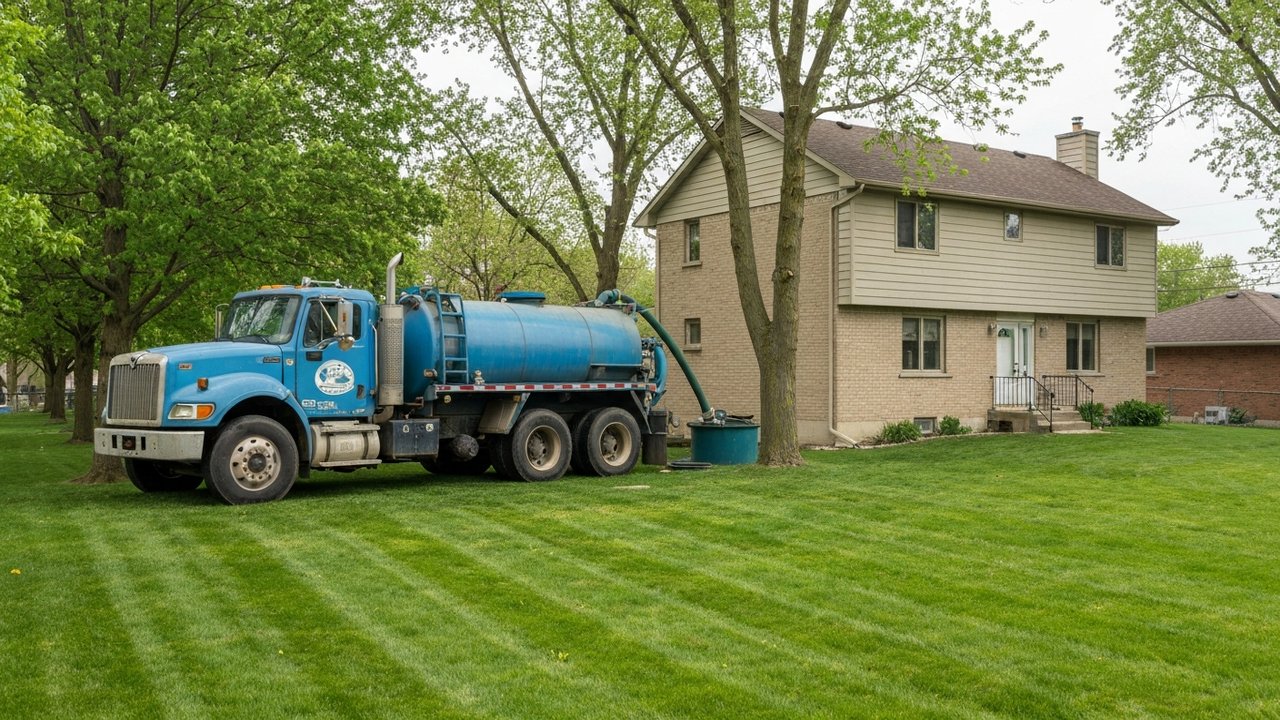
What a septic baffle does, and why it fails
A septic tank has two baffles: one at the inlet and one at the outlet. The inlet baffle deflects incoming wastewater downward into the liquid zone, preventing it from skimming across the surface and disturbing the settled sludge below. The outlet baffle sits on the outlet pipe and stops the floating scum layer from escaping into the drain field.
Both matter, but a failing outlet baffle causes the most damage. When scum flows out unchecked, it can clog drain field soil fast. Concrete baffles, standard in tanks installed before the early 1990s, are especially vulnerable. Hydrogen sulfide gas produced during anaerobic decomposition attacks the concrete from inside the tank over time, corroding it until chunks fall off or the baffle disappears entirely. A tank that is 30 years old or more almost certainly has degraded baffles. You will not know for sure until a pro inspects it with the lid open and the tank pumped.
PVC sanitary tees are the modern replacement. They cost almost nothing, hold up indefinitely in the tank environment, and install quickly once the tank is accessible.
Some installers now fit an outlet effluent filter in place of a plain tee. These plastic cartridge filters catch fine solids and are a worthwhile upgrade. If your tank is getting a new outlet baffle anyway, ask about adding one. Check price on Amazon.
Baffle replacement cost
The part itself is cheap: a PVC sanitary tee for a 4-inch outlet runs $10 to $40. What makes the job cost money is getting to it.
Expect to pay $150 to $400 total for baffle replacement. Here is what makes up that range:
- Pumping the tank. A pro needs the tank empty to safely inspect and replace the outlet baffle. If you combine this with a scheduled pump-out, the baffle work adds very little to the bill. If it is a separate visit, you pay the full pump-out fee on top. See our septic tank pumping cost guide for current price ranges, which run $300 to $600 for most residential tanks.
- Labor. Installing a new PVC tee onto the outlet pipe takes under an hour once the tank is open and empty. Labor rates vary by region, but the task itself is not time-consuming.
- Lid access. If your tank lid is buried, expect a dig fee of $50 to $200 depending on how far down it sits. Installing a riser at the same time eliminates that fee at every future service.
Replacing both baffles in one visit makes sense if one is already bad. The tank is pumped and open, so the incremental cost to do the inlet side too is small.
What a distribution box does, and why it fails
A distribution box, commonly called a D-box, sits between the septic tank and the drain field laterals. Effluent flows from the tank outlet pipe into the D-box, which divides it among the several pipes leading to the individual field trenches. The goal is even distribution so that no single trench carries more than its share.
Settling is the most common failure. A D-box shifts even slightly in the soil over time, and the outlet ports that were once level tilt out of plane. One pipe drops lower than the rest and captures most of the flow. That trench fills fast; the others stay underused. The overloaded lateral eventually saturates, the soil becomes anaerobic, and effluent surfaces or backs up. Left alone, that pattern ends with a failed field.
Concrete D-boxes crack too, especially in cold climates where frost cycles stress the box. Roots find hairline cracks and widen them. Plastic replacement boxes have become popular because they resist cracking and are easier to level during installation.
Distribution box replacement cost
Plan on $500 to $1,500 for a standard residential D-box replacement. The box itself is not the expense. A precast concrete replacement box costs $50 to $150; a plastic one is similar. Excavation and labor drive almost all of the total cost.
What moves the price around:
- Depth. A D-box sitting 18 inches down is a short dig. One buried 4 feet in clay is a different job. Deeper boxes can also require shoring or a backhoe.
- Number of outlet pipes. A simple three-lateral system takes less time to reconnect than a larger field with six or more outlets, each of which has to be cut, fitted, and leveled.
- Soil and access conditions. Rocky soil or a site with no room for equipment raises labor cost and time.
- Permits. Many counties require a permit for D-box replacement because it is part of the permitted septic system. State and local health departments set the rules. Budget $75 to $200 for permit fees where required. Your county sanitarian is the right person to call before you start work.
- Field damage. If the distribution imbalance has already overloaded one lateral, fixing the box alone will not fix the system. Get the field assessed too. Ignoring a damaged trench is a good way to spend $1,500 on a D-box and still face septic drain field replacement cost within a few years.
When these two jobs surface at the same time
A failing baffle and a cracked distribution box are separate problems, but they often get discovered together because both show up during a routine pump-out and inspection. The U.S. EPA SepticSmart program recommends having a licensed pro inspect a conventional system at least every three years. When the tank is empty and the lid is open, a thorough inspector checks the baffles, measures sludge and scum depths, looks at the condition of the outlet pipe, and flags anything that should be addressed before the next service. If the outlet baffle is missing and solids have been leaving the tank, a smart pro will also want to look at the D-box and the field for downstream damage.
Because the tank needs pumping before baffle work anyway, scheduling that repair at the same visit as a routine pump-out saves you a separate trip charge. These kinds of component repairs fit into the broader picture of system ownership costs covered in our how much does a septic system cost guide.
What the job actually looks like
For a baffle replacement, the pro pumps the tank, opens the lid, pulls any remaining concrete fragments from the outlet pipe, and pushes a new PVC sanitary tee into place. The tee extends down into the tank to hold back scum and down through the outlet to carry effluent. The lid goes back on. Including pumping time, the whole visit usually runs two to three hours.
For a D-box replacement, the work is more involved. The pro locates the box, sometimes using the original permit drawing from the county health department or a probe if no drawing exists. The crew excavates to expose it, disconnects the inlet from the tank and each outlet pipe going to the field, pulls the old box, sets the new one, reconnects all pipes, and checks that every outlet invert is level using a torpedo level or laser. Then they backfill and grade. Getting the leveling right matters more than anything else in this job. A box that tips even a quarter inch redirects the flow badly, so choosing a contractor who takes that step seriously is worth the few extra minutes it takes to ask about their process.
FAQ
Can I replace a septic baffle myself? In most states, any work that opens the septic tank requires a licensed contractor and sometimes a permit. Even where the rules are less strict, pumping the tank first is essentially required, which means calling a pro. For most homeowners the practical answer is no, and trying to work around an open tank without proper training creates real safety risks from hydrogen sulfide exposure.
How do I know if my baffle is missing? You usually cannot tell without an inspection while the tank is pumped and open. Some signs that the outlet baffle may have failed: unusual odors from the drain field area, or a field that seems to be struggling sooner than expected given the pumping schedule. Ask your pro to inspect both baffles at every pump-out and to note their condition in writing.
What happens if I ignore a cracked distribution box? Distribution becomes uneven. One lateral carries almost all of the flow and fills with solids faster than it can recover. The soil in that trench eventually fails. Repairing a single damaged lateral can cost $1,000 to $3,000; replacing a full drain field often runs $3,000 to $15,000 or more depending on size, soil type, and site conditions. A D-box at $500 to $1,500 is a far smaller bill.
Does replacing a D-box or baffle require a permit? It depends on where you live. Many counties and states require a permit for any repair to the permitted septic system, including D-box work. Requirements vary considerably. Contact your local health department or county sanitarian before scheduling any work. A licensed septic contractor familiar with your jurisdiction will also know what is required and can usually pull the permit on your behalf.
This article is general educational information, not professional plumbing or engineering advice. Costs vary by region, soil conditions, and system type. Always get a written quote from a licensed septic professional and confirm requirements with your local health department before starting any septic repair.
- Septic Pump-Out Schedule Calculator Estimate the years between pump-outs from your tank size and household, and get a reminder.
Related guides
Cost to Repair a Septic System
What common septic repairs cost in the US, from a simple baffle swap to a failed drain field, and how to know which repairs are worth making.
Read the guide →Cost to Move or Relocate a Septic Tank
Relocating a septic tank means a full new installation plus abandoning the old one; most homeowners pay $8,000 to $25,000 or more depending on site and drain field needs.
Read the guide →Small Septic System Cost for Tiny Homes and Cabins
What a small septic system actually costs for a tiny home, cabin, or seasonal property, plus what drives the price and when a conventional system won't work.
Read the guide →Know what septic service should cost
Before you call a company, it helps to know the typical price for pumping, repair, and replacement so you can spot a fair quote. Our cost guide breaks it down.
See septic cost guide →