Aerobic Septic System Cost
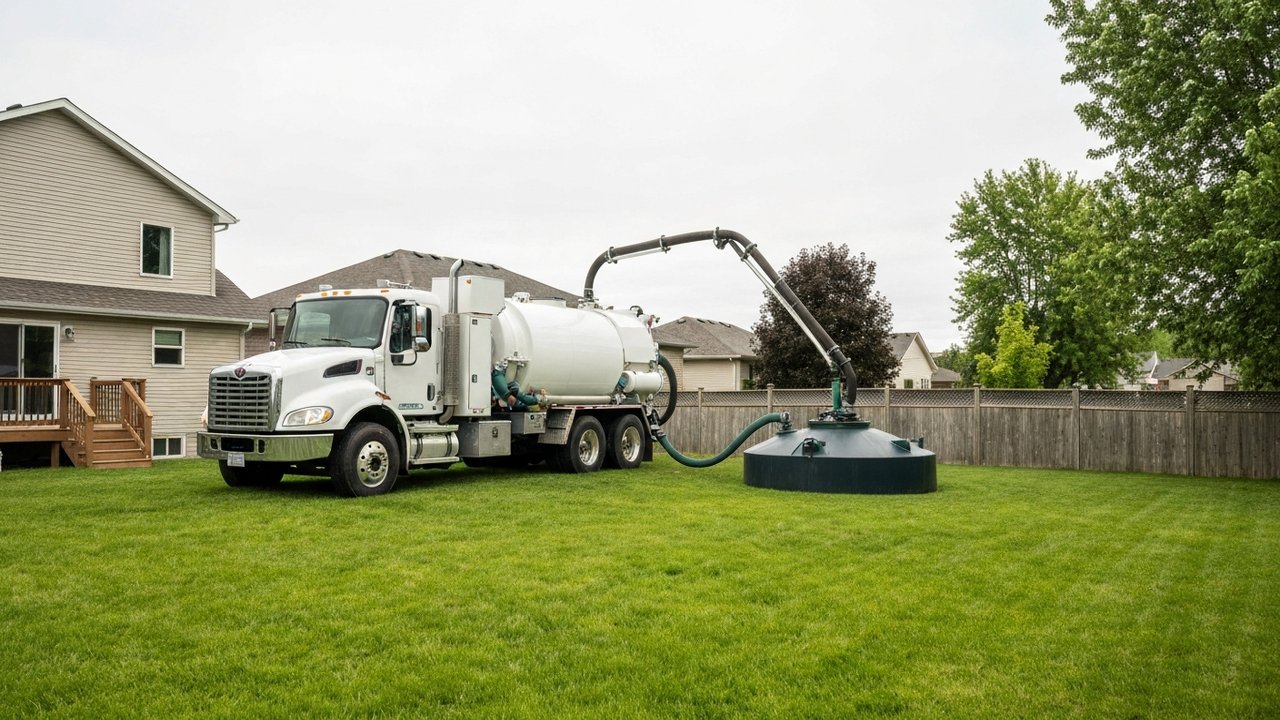
What is an aerobic septic system?
A conventional septic tank is anaerobic: bacteria break down waste without oxygen, and the partially treated liquid flows to a drain field. An aerobic treatment unit adds a blower or compressor that pumps air into the treatment chamber, activating aerobic bacteria that work faster and treat effluent to a higher standard.
That cleaner effluent can be dispersed through spray heads, drip irrigation lines, or raised distribution beds. The flexibility matters where a conventional system would not pass permitting: small lots, clay-heavy or shallow soils, high water tables, and sites near lakes or private wells. Aerobic systems are especially common in Texas, parts of the Southeast, and rural areas with poor-draining soils.
The tradeoff is complexity. An ATU has more components than a conventional tank, including a blower, float switches, a control panel, and disinfection equipment. It draws electricity continuously, and most states require the owner to carry a service contract with a licensed maintenance provider.
What an aerobic system costs to install
For most residential properties, a complete installation runs $10,000 to $20,000. That price includes the ATU tank, the blower and control panel, the disinfection system (usually a chlorine tablet feeder, though some use UV), and the dispersal field. Homeowners with difficult site conditions, large households, or premium spray-irrigation layouts often pay more.
Costs break down roughly like this:
The ATU unit itself. Tank and internal components vary by brand and capacity. Common residential brands include Norweco, Jet, and Premier Tech. Equipment for a standard residential capacity (up to about 500 gallons per day, the NSF/ANSI 40 residential certification threshold) typically runs $2,000 to $5,000 before installation labor or site work.
Installation labor and permits. Labor varies widely by region and soil conditions. Excavation, setting the tank, running the electrical circuit, and connecting the dispersal system can add several thousand dollars. Permits are required in every state. Texas, with a large ATU market overseen by the Texas Commission on Environmental Quality (TCEQ), illustrates how requirements vary by county and soil type.
Dispersal system. Spray heads are the most common dispersal method for aerobic systems. A basic spray irrigation setup adds roughly $1,500 to $4,000 depending on yard size and number of heads. Drip irrigation or low-pressure distribution systems cost more and are used when spray is not permitted or practical on the parcel.
Disinfection. Chlorine tablet feeders are the standard and inexpensive to maintain. UV disinfection units cost more upfront but eliminate the need to handle chlorine. Both approaches are commonly accepted by state health departments.
For a broader look at how aerobic systems compare to other non-standard designs, see engineered and alternative septic system costs.
What drives the price up
Several factors push installation costs above the typical range:
Lot size and dispersal area. More yard means more pipe, more spray heads, and more labor. A system located far from the house requires a longer run of distribution pipe.
Site conditions. Rocky ground, steep slopes, or a high water table add excavation difficulty and sometimes require fill material or raised installation. These add cost quickly.
Electrical distance. The blower needs a dedicated circuit. If the main panel is far from the tank location, the electrician’s share of the job grows.
State and county requirements. Some jurisdictions specify approved ATU brands, require NSF/ANSI 40 certification, mandate third-party inspections, or enforce tighter setbacks. Meeting those requirements on a tight site can add meaningful cost.
Retrofit versus new installation. Replacing a failed conventional tank with an aerobic unit sometimes costs less than a fully new system, because some site prep already exists. It depends on whether the old drain field can still be used.
Ongoing costs after installation
Installation is only part of the picture. Aerobic systems cost more to operate than a conventional tank, year over year.
Annual maintenance contract. Most states that permit ATUs require the homeowner to hold a service agreement with a licensed provider. The provider visits one or more times per year to inspect the blower, test effluent quality, service the disinfection system, and verify the controls. The U.S. EPA’s SepticSmart program recommends annual inspections for all alternative systems with mechanical components. Typical contract costs run $300 to $500 per year.
Electricity. The air blower runs continuously, all year. Depending on the blower’s efficiency and your local rate, the added cost generally falls in the range of $30 to $75 per month. Your contractor can tell you the draw of the specific model they plan to install.
Chlorine tablets and repairs. If your system uses a chlorine feeder, you refill it a few times per year. Blowers and float switches also fail over time; budget for occasional repair calls beyond what the contract covers. Replacement blowers typically run a few hundred dollars.
For more on what aeration components do and what can go wrong, see septic tank aerator pumps explained.
Aerobic versus conventional: the honest comparison
A conventional septic system with a gravity drain field runs $3,000 to $8,000 installed, roughly half (or less) the aerobic system price. No electricity and no annual service contract required, just pumping every few years.
The usual reason to choose aerobic is that you have no alternative: soil or lot conditions rule out a conventional drain field, and the aerobic option is the only permitted path. In that situation the comparison shifts from aerobic versus conventional to aerobic versus not building at all.
If your property supports a conventional system, it will almost always be less expensive to install and maintain. An aerobic system chosen where a conventional one would work is usually about treating effluent near a lake, private well, or other sensitive water source where the higher output quality matters.
For a full look at conventional installation costs, see how much does a septic system cost.
Before you sign a contract
Get at least two itemized quotes. Ask which ATU brand and model each contractor plans to install and confirm it carries NSF/ANSI 40 certification. Ask what the annual maintenance contract costs and exactly what each visit covers. Confirm with your county or state health department what is permitted for your parcel; many publish approved ATU lists and setback tables online, and verifying upfront prevents costly change orders.
FAQ
How much more does an aerobic system cost than a conventional one? Typically two to three times as much upfront: $10,000 to $20,000 versus roughly $3,000 to $8,000 for a standard conventional system. Add maintenance contracts and electricity over the system’s life and the difference is substantial. The return is higher-quality effluent and the ability to install where a conventional system would fail permitting.
Which states most commonly require aerobic septic systems? Texas is the most prominent example. The Texas Commission on Environmental Quality oversees a large number of residential ATUs because soil and lot conditions limit conventional options across much of the state. Other states with poor-draining soils, shallow water tables, or setback requirements near water bodies also direct homeowners toward aerobic or other alternative systems through permitting.
What does NSF/ANSI 40 certification mean for an ATU? NSF/ANSI 40 is the American national standard for residential aerobic treatment systems, setting the performance requirements a unit must meet to earn certification. Many states and counties require it as a permitting condition. Ask any contractor to confirm the proposed model is certified and to provide documentation before you sign.
Do aerobic systems still need to be pumped? Yes. Aerobic treatment handles liquid-phase breakdown well, but solids still accumulate in the tank compartments and must be removed by a licensed professional. Most ATUs need pumping every three to five years, depending on household size and usage. A good maintenance provider measures solids during service visits and schedules a pump-out before levels get too high.
This article is general educational information, not professional plumbing, engineering, or legal advice. Costs vary by region, site conditions, and contractor. Always confirm requirements with your county or state health department and get written quotes from licensed local professionals before starting any work. No outcome is guaranteed.
- Septic Pump-Out Schedule Calculator Estimate the years between pump-outs from your tank size and household, and get a reminder.
Related guides
Cost to Repair a Septic System
What common septic repairs cost in the US, from a simple baffle swap to a failed drain field, and how to know which repairs are worth making.
Read the guide →Cost to Move or Relocate a Septic Tank
Relocating a septic tank means a full new installation plus abandoning the old one; most homeowners pay $8,000 to $25,000 or more depending on site and drain field needs.
Read the guide →Small Septic System Cost for Tiny Homes and Cabins
What a small septic system actually costs for a tiny home, cabin, or seasonal property, plus what drives the price and when a conventional system won't work.
Read the guide →Know what septic service should cost
Before you call a company, it helps to know the typical price for pumping, repair, and replacement so you can spot a fair quote. Our cost guide breaks it down.
See septic cost guide →